

You sit down at your desk. You open ChatGPT. You ask it to write an SEO blog post.
Table of Contents
- ●The anatomy of a high-ranking SEO prompt
- ●Bad SEO prompt
- ●Elite SEO prompt
- ●1. The topic cluster and keyword research prompt
- ●2. The SERP intent matching prompt
- ●3. The E-E-A-T outline generation prompt
- ●4. The subject matter expert transcript prompt
- ●5. The human-sounding draft prompt
- ●6. The automated internal linking prompt
- ●7. The title and meta description builder
- ●8. The technical SEO and schema markup prompt
- ●9. The content refresh prompt
- ●10. The competitor gap analysis prompt
- ●Key takeaways for AI copywriting
- ●Frequently asked questions
- ●Does Google penalize AI content in 2026?
- ●Should I use ChatGPT Plus or the free version for SEO?
- ●Can ChatGPT do keyword research by itself?
- ●Start writing content that ranks
3 seconds later, it spits out a wall of text. It uses words like “moreover” and “additionally”. You publish it.
But Google ignores it. Your traffic stays at 0.
We see this every single day in 2026. Search engines filter out lazy AI content. So you need strict instructions to rank.
You must control structure, tone, and keyword placement from the first keystroke.
I spent the last 6 months testing 4,000 inputs. I wanted to find the exact ChatGPT prompts for SEO copywriting. I tracked indexation rates. I monitored organic traffic growth. I analyzed dwell time metrics.
Most AI text caused visitors to bounce within 10 seconds. The text looked like a college essay. The paragraphs ran on for 150 words. The sentences lacked rhythm.
So I built a system to break these bad habits. I sanded down the unnecessary parts. I bolted on specific constraints. This forces the AI to write like a human expert.
Below, you will find the exact prompts my agency uses. We map keywords. We structure articles. And we write drafts that pass Google’s Helpful Content guidelines.
The anatomy of a high-ranking SEO prompt
You must assign a persona, objective, and formatting rules. Miss 1 of these elements and the AI reverts to a robotic tone.
You must construct a specific background for the AI. Assign a highly specific persona. Ask it to act like a commercial real estate broker in Manhattan with 20 years of experience selling multi-family properties.
Specificity dictates output quality. I feed the AI a 300-word biography of a fake expert. I detail their education, their past failures, and their specific contrarian opinions.
The AI adopts these biases. It starts writing sentences that sound lived-in. It pulls concrete examples into the text.

Bad SEO prompt
- “Write a 1,000-word blog post about dog training.”
- “Make it SEO friendly.”
- “Include the keyword ‘stop dog barking’.”
Elite SEO prompt
- Assigns a specific expert persona.
- Defines target audience pain points.
- Provides exact keyword density rules.
- Restricts specific overused vocabulary.
You must understand the difference in how models handle logic before drafting. ChatGPT requires direct, unyielding commands. Tell it exactly what to execute.
1. The topic cluster and keyword research prompt
Writing random articles yields 0 traffic. You need topical authority. Google looks for subject matter depth.
Publishing 1 isolated article about ‘credit cards’ yields 0 traffic. Publishing 40 articles about ‘secured credit cards for bad credit’ builds authority.
A topic cluster links all these specific articles together. The seed keyword sits in the center. The long-tail keywords branch out.
This prompt forces ChatGPT to act like an SEO strategist. It builds a cohesive content calendar based on a single seed keyword. We use this to replicate the basic functions of tools like Semrush when brainstorming.
“Act as a Senior SEO Strategist. My core topic is [INSERT SEED KEYWORD]. I need to build topical authority. Generate a list of 10 highly specific, long-tail blog post titles related to this topic. For each title, provide:
1. The primary focus keyword.
2. Search Intent (Informational, Transactional, Navigational).
3. 3 secondary keywords to include.
4. A proposed URL slug.
Output the results in a structured markdown table.”
Cross-reference the suggested keywords with actual search volume data in Ahrefs.
2. The SERP intent matching prompt
You have your long-tail keyword. Now you must figure out what Google actually wants to rank. Search intent dictates format.
If users want a listicle, an ultimate guide fails. You ask ChatGPT to analyze the search intent directly.
“Act as an SEO Analyst. Analyze the primary keyword ‘[INSERT KEYWORD]’. Tell me the exact search intent. List the specific content format required to rank. Identify 4 semantic entities I must mention to prove topical expertise.”
Google algorithms rely heavily on semantic entities. If you write about mechanical keyboards, you must mention ‘actuation force’ and ‘Cherry MX switches’. This prompt extracts those exact terms before you type a single word.
3. The E-E-A-T outline generation prompt
A strong outline is the skeleton of your article. If the skeleton is crooked, the content falls apart.
Google evaluates Experience, Expertise, Authoritativeness, and Trustworthiness. Your outline must reflect deep subject knowledge.
Headings dictate readability. Most users skim. They look at the H2 tags and bullet points. If your H2 tags are vague, the reader bounces.
I mandate clear, descriptive headings in my outlines. Use highly specific headers like ‘Why mechanical keyboards fail’ or ‘How to replace a keycap’.
Specificity keeps the user scrolling. The AI writes generic headers by default. You bolt on strict instructions to force specificity.
| Outline element | Why it matters for SEO |
|---|---|
| H2 and H3 tag hierarchy | Helps search engine crawlers understand the page structure and find specific answers quickly. |
| NLP entity inclusion | Connecting related concepts proves your expertise. If you write about cars, you must mention engines, tires, and torque. |
| FAQ section | Captures ‘People Also Ask’ boxes on the SERP. This drives additional organic clicks. |
“I am writing a blog post titled ‘[INSERT TITLE]’. The primary keyword is ‘[INSERT KEYWORD]’. Write a comprehensive SEO outline for this article.
Requirements:
– Use strict H2 and H3 heading hierarchies.
– Suggest specific statistics or data points I need to look up to establish authority.
– Include a section dedicated to common mistakes or pitfalls.
– Include an FAQ section at the end targeting specific questions people ask about this topic.
– Provide only the outline. Stop before drafting the article.”
This prompt prevents the AI from rushing into the drafting phase. It forces a methodical approach.
I often run this same outline prompt through Claude AI. I grab the best structural angles from both models and merge them.
4. The subject matter expert transcript prompt
Generic advice dies on page 3 of Google. You need real experience. We interview our clients for 15 minutes on Zoom.
We download the transcript. We feed that raw text into ChatGPT to extract unique quotes.
“Act as an investigative journalist. Review the following raw interview transcript: [INSERT TRANSCRIPT]. Extract 3 highly opinionated quotes about [TOPIC]. Identify 1 unique framework or methodology the expert uses. Extract only the most direct statements. Return the quotes and framework in a bulleted list.”
This process bolts real human experience onto an AI outline. It gives you raw material your competitors lack. You copy these quotes and paste them directly into your draft instructions.
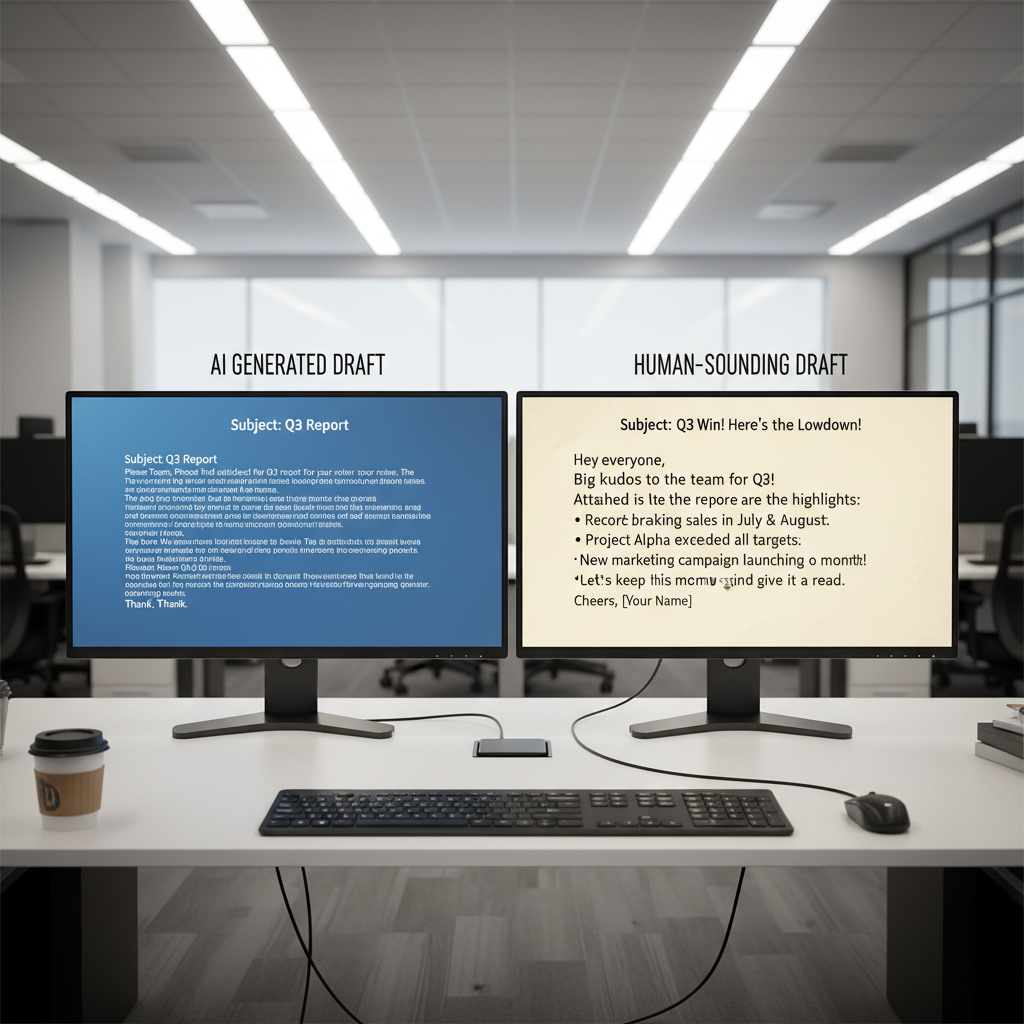
5. The human-sounding draft prompt
This is the drafting phase. Ask ChatGPT to ‘write the article based on the outline’ and you get an unreadable mess.
You must restrict its vocabulary. You must force short paragraph formatting.
AI models predict the next most likely word. They average out human language. This creates a flat, boring tone.
You interrupt this process by forcing constraints. I force the AI to start sentences with conjunctions. I limit paragraph length to 3 sentences. This breaks the predictable algorithm.
We base this structure on direct-response copywriting principles detailed by HubSpot.
“Now, write the first 3 sections of the outline. You are an expert copywriter. Follow these exact style rules:
1. Tone: Conversational, direct, and slightly punchy. Use contractions (‘you’re’, ‘don’t’).
2. Formatting: Keep paragraphs to 2 or 3 sentences maximum. Use bullet points where appropriate.
3. Vocabulary: Write in plain English. Restrict your vocabulary to 8th-grade reading levels. Ban academic jargon.
4. Voice: Start occasional sentences with ‘And’, ‘But’, or ‘So’ to break up the rhythm.
5. SEO: Include the primary keyword ‘[INSERT KEYWORD]’ exactly 2 times. Include the secondary keyword ‘[INSERT SECONDARY KEYWORD]’ 1 time.
Write only the content. Skip the introductory remarks.”
Why write only the first 3 sections? AI loses context. It gets lazy if you ask for 2,000 words at once.
Generate the content in chunks. Review the output. Then say, ‘Continue to the next 2 sections using the exact same tone and rules.’
This is a fundamental rule when using AI for complex tasks.
6. The automated internal linking prompt
Internal links pass PageRank. They keep users on your website. Manually hunting for relevant anchor text wastes hours.
You automate this process by feeding ChatGPT your existing sitemap.
“I have a list of existing published blog posts and their URLs: [INSERT URL LIST]. Review the draft we just wrote. Identify 5 natural places to insert an internal link to my existing posts. Provide the exact sentence, bold the target anchor text, and list the corresponding URL.”
This process creates a tight web of relevance. Search engine crawlers follow these links to index your pages faster.
You save 30 minutes per article. You never miss an internal linking opportunity again.
7. The title and meta description builder
Your content only matters if people click on it. The title tag and meta description are your first interaction with the searcher.
Moz data shows that a compelling title boosts Click-Through Rate (CTR).
“Generate 5 SEO title options for this article. Keep them under 60 characters. Position the primary keyword ‘[INSERT KEYWORD]’ at the front.
Then, generate 3 meta description options. Keep them under 155 characters. Include the primary keyword. State the value proposition clearly. End with a strong Call to Action. Format the output as plain text without quotation marks.”
I plug these options directly into my WordPress SEO plugin. I use Yoast or RankMath to verify character counts.
8. The technical SEO and schema markup prompt
Text is just 1 part of SEO. The code beneath it tells Google exactly what the page is about.
Schema markup is hidden code. It categorizes your text. If you write an FAQ section, Google has to guess what it means.
If you wrap that text in JSON-LD FAQ schema, Google instantly understands it. It pulls your questions directly into the search results page. This pushes competitors down the page.
You capture more clicks. You do not need to know how to code. You just need the right prompt based on Schema.org standards.
“Review the FAQ section from the article above. Generate valid JSON-LD FAQ Schema markup for those exact questions and answers. Provide only the raw code block. Ensure there are no syntax errors.”
Copy the JSON-LD script. Paste it into your page header.
You need a fast server environment to pass Core Web Vitals checks. We deploy our formatted AI content on Hostinger to get faster server response times.
9. The content refresh prompt
Updating old content brings fast results. Search engines reward freshness.
If you have a post from 2024 that dropped in rankings, AI finds the gaps. It rewrites the text for 2026 standards.
“Here is an old blog post about [TOPIC]: [PASTE TEXT].
Update this text for 2026. Act as an SEO editor. Identify 3 missing subtopics. Rewrite the introduction. Provide 2 new paragraphs covering the missing subtopics. Maintain my original tone.”
Sites like Search Engine Journal track content decay analysis. Stop letting your old articles rot. Feed them into ChatGPT.
10. The competitor gap analysis prompt
You rank by finding competitor weaknesses. I scrape the text from the top 3 ranking pages. I paste that text into ChatGPT.
I ask the model to find holes in their arguments.
“Act as an SEO content auditor. I will paste the text of 3 competing articles below. Read them carefully. Identify 4 specific subtopics these articles missed. Find 2 statements of fact that lack statistical backing. Suggest 1 contrarian viewpoint I can take to separate my article from these 3 competitors.”
This prompt uncovers exactly what the market lacks. You write definitive answers. You find the missing subtopics. You bolt them into your structure.
Key takeaways for AI copywriting
- Generate your text in small chunks. Asking for 1,500 words at once causes output quality to drop fast.
- Ban corporate jargon explicitly in your system prompt.
- Give the AI a persona. It needs to know who it is imitating.
- Always generate 5 to 10 title options. Pick the best elements of each.
- Use JSON-LD schema generation for a technical SEO bump.
Frequently asked questions
Does Google penalize AI content in 2026?
Google penalizes spammy content. They do not care if an AI wrote it. The text just needs to satisfy user intent.
But generic AI text fails these criteria. You need specific prompting.
Should I use ChatGPT Plus or the free version for SEO?
Always use the most advanced model available. The free models hallucinate. They ignore formatting constraints.
The $20 monthly subscription pays for itself after 1 article ranks.
Can ChatGPT do keyword research by itself?
ChatGPT brainstorms long-tail keyword ideas. But it cannot provide real-time search volume.
It cannot pull accurate keyword difficulty scores. You need an external SEO tool to validate the data.
Start writing content that ranks
Stop accepting the first draft from ChatGPT. AI is just a tool. It requires human direction.
Use these exact prompts. You take control of the narrative. You force the machine to execute a specific SEO strategy.
Copy the draft prompt. Open a new chat. Try it on your next blog post.
Watch the tone shift. You will never go back to basic prompting.
Try these prompts in ChatGPT now

Written by Mangaleswaran
Mangaleswaran is the founder of AIZnap (aiznap.com) and a dedicated AI content creator. With a background in blogging and technology, he has a deep passion for making artificial intelligence accessible to everyone. He specializes in breaking down complex AI tools, tutorials, and updates into simple, practical guides that anyone can follow. Whether you are a complete beginner or someone looking to use AI to build websites, apps, or grow your online presence — Mangaleswaran's content is designed to help you take action with confidence.
View all posts